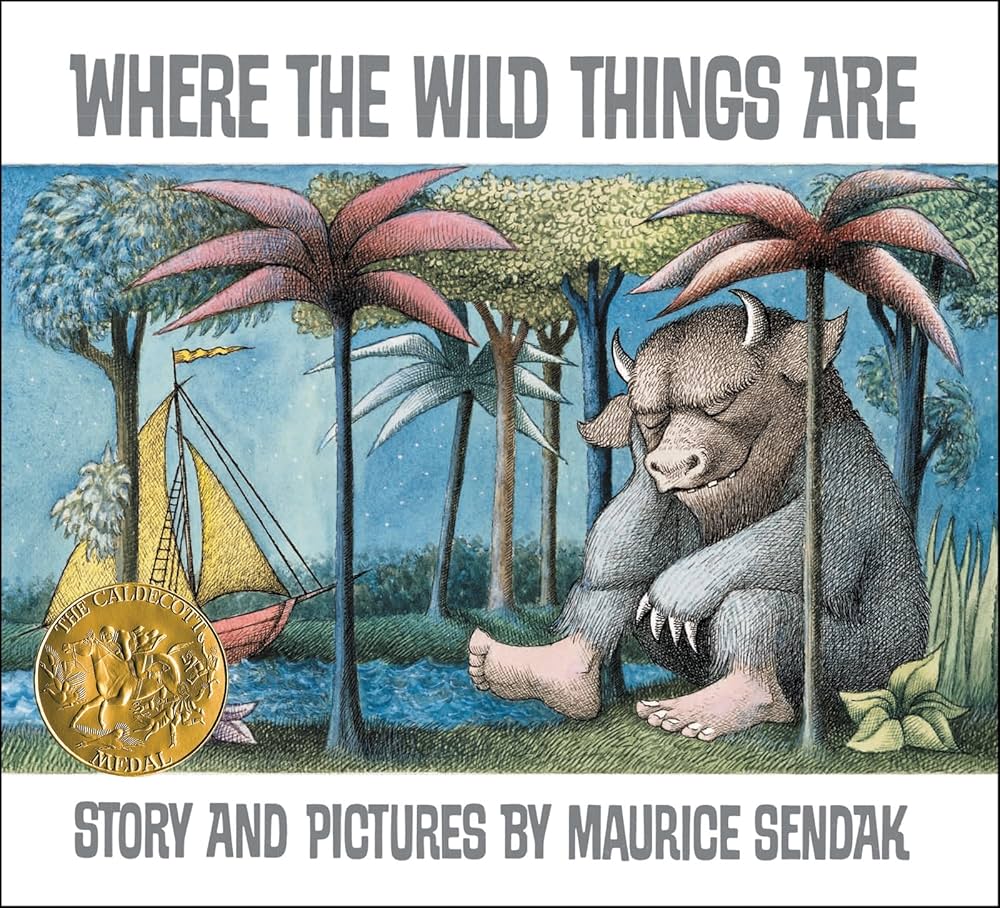
In this post, I will be explaining what a story vine is and showing you one that I made about the story “Where The Wild Things Are” by Maurice Sendak.
Story Vine Concept:
The idea of creating a story vine has been taken from Robin Bright’s book, Sometimes Reading Is Hard, pages 91-92. Students will first read a book and once completed, create or use a long piece of either rope, string, or braid and with whatever else you have access to, create pieces that are important to the story and attach it to your “vine.” Then, you can re-read the book to the students and then get them to retell the story to a peer using their story vine and sequence.
My Example:
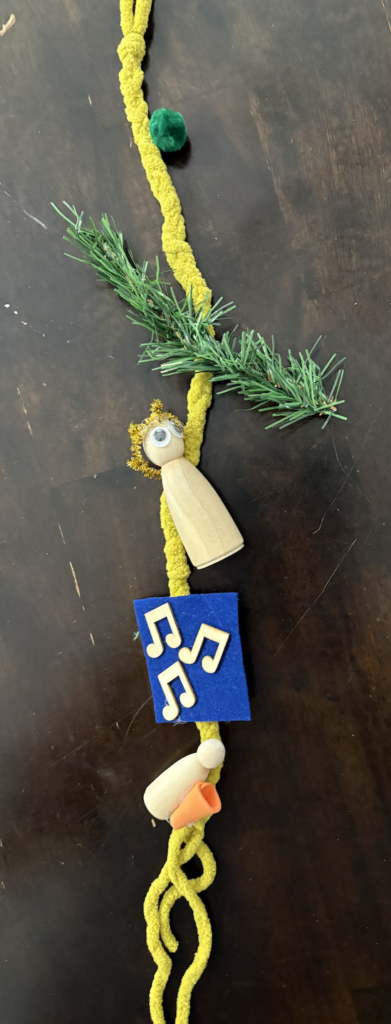
- I used a pom pom as a symbol to show mischief as the boy (Max) was not listening to his mother at the start
- Because of this, she called him “wild” and trees started growing inside of his room
- The wild things took Max in and made him king of the wild
- They cause a huge rumpus and Max was growing tired of this wild behaviour
- He made it back home and his food bowl was still warm
By having these little symbols to help students remember the story is very beneficial to helping students retell and engage with the story.
Classroom Experience
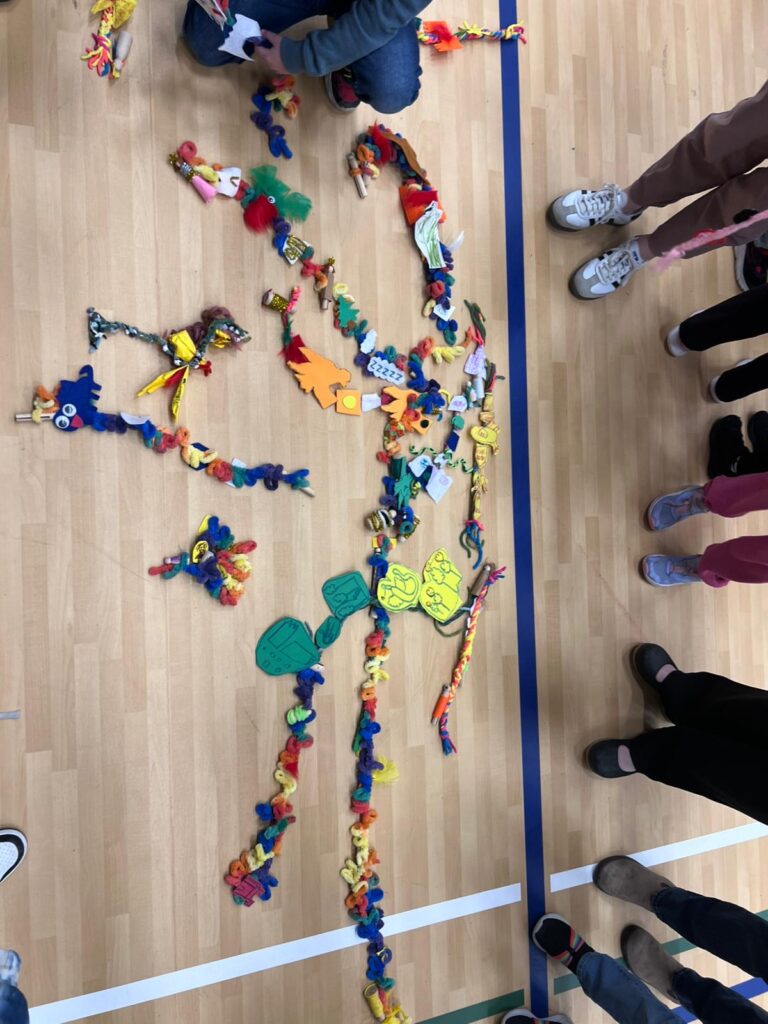
We read “The Paper Bag Princess” by Robert Munsch with the grade 2/3 students inside a local bookstore and then they all created their story vines about this book. They then retold the story to a kindergarten class. Here is the end result with all the vines laid out together!
All of the students were very interested and engaged and they did so well at retelling the story. This was a great experience for me as I was able to see how well each student understood the book and how much more confident they were at sharing by the end of it all.
Curriculum Relations:
ELA Curricular Competencies:
- Explore oral storytelling processes
- Use developmentally appropriate reading, listening, and viewing strategies to make meaning
- Exchange ideas and perspectives to build shared understanding
- Plan and create a variety of communication forms for different purposes
- Recognize the structure and elements of a story
- Engage actively as listeners, viewers, and readers, as appropriate, to develop understanding of self, identity, and community
- Use developmentally appropriate reading, listening, and viewing strategies to make meaning
- Engage actively as listeners, viewers, and readers, as appropriate, to develop understanding of self, identity, and community
- Recognize the structure and elements of story
- Exchange ideas and perspectives to build shared understanding
- Plan and create a variety of communication forms for different purposes and audiences
- Use oral storytelling processes
ELA Content:
- Elements of a story
- Reading strategies
- Oral language strategies
- Features of oral language
- Elements of a story
- Reading strategies
- Oral language strategies
- Features of oral language
FPPL: By retelling the story with your story vine to help guide you, allows for oral traditions to be practiced and shared.