In this post, I will be comparing Driscoll’s Reflection Model and Boud’s Reflective Cycle, as well as mentioning how I will try to use them in my upcoming practicum.
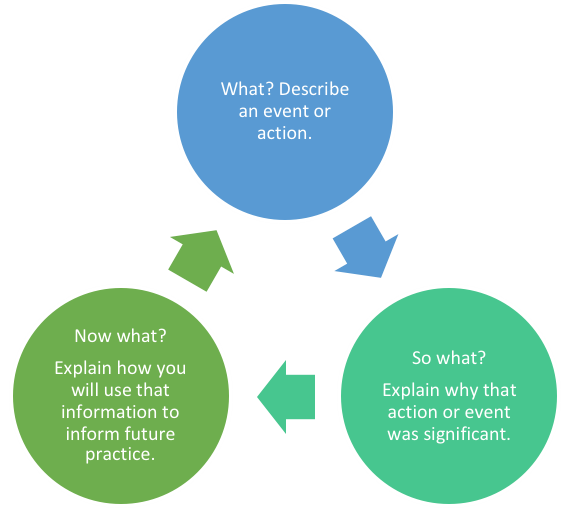
Driscoll’s Model
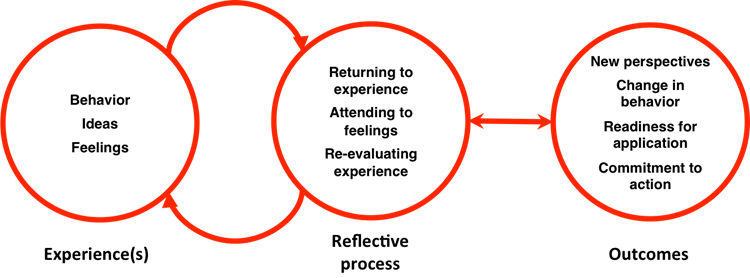
Boud’s Cycle
Importance In The Classroom
Reflection models are important tools for helping students think about their learning, and both Boud’s reflective cycle and Driscoll’s reflection model provide these approaches in the classroom. Both models share the same overall goal of encouraging learners to reflect on experiences, but the structure, depth, and focus of them are quite different.
Similarities:
They both guide students to look back on an experience, analyze it, and consider future actions. Each model promotes critical thinking and helps students make meaning from what they have learned. They also both support the development of metacognitive skills, which are especially important for middle school learners as they begin to take more responsibility for their own learning. I will try to incorporate both models when I am in my practicum.
Differences:
Boud’s reflective cycle is more open-ended and places a strong emphasis on emotions. It encourages students to consider how they felt during an experience and how those feelings influenced their learning. This can lead to deeper, more personal reflection, but it may be challenging for students who need more structure. On the other hand, Driscoll’s model is simple and highly structured, using three clear questions: “What?”, “So what?”, and “Now what?” This makes it easier for students to follow and is more effective for beginners or younger learners.
UVic Teacher Competency:
I am relating these models to competency number 12: develop an understanding of how learners learn in order to cultivate effective learning environments. Students using these models will understand what they know and how they learn based on reflection and experience. It will provide it visually while inviting students to slow down and take a moment to reflect on their own learning which will help cultivate a stronger learning environment.
Reflection:
Both models are valuable in a classroom because they serve different purposes. Driscoll’s model is useful for introducing reflection and helping students build confidence, while Boud’s model can be used to deepen thinking once students are more comfortable. Using both will allow teachers to differentiate instruction and support a range of learning styles.
I am curious as to how you would set this up in a classroom? What would be the catalyst for learning here? Would it be as a self- assessment?
Cheers,
J