In this post, I will be reflecting on a class we had with a guest speaker about the distrust of society and people towards science, and radon tests.
During our class, we had a guest speaker join us for a discussion on science and its role in society. He started his presentation with an inquiry activity that he himself observed in the Kootenays. We were shown several photos of small black rocks exposed after a recent snowfall.
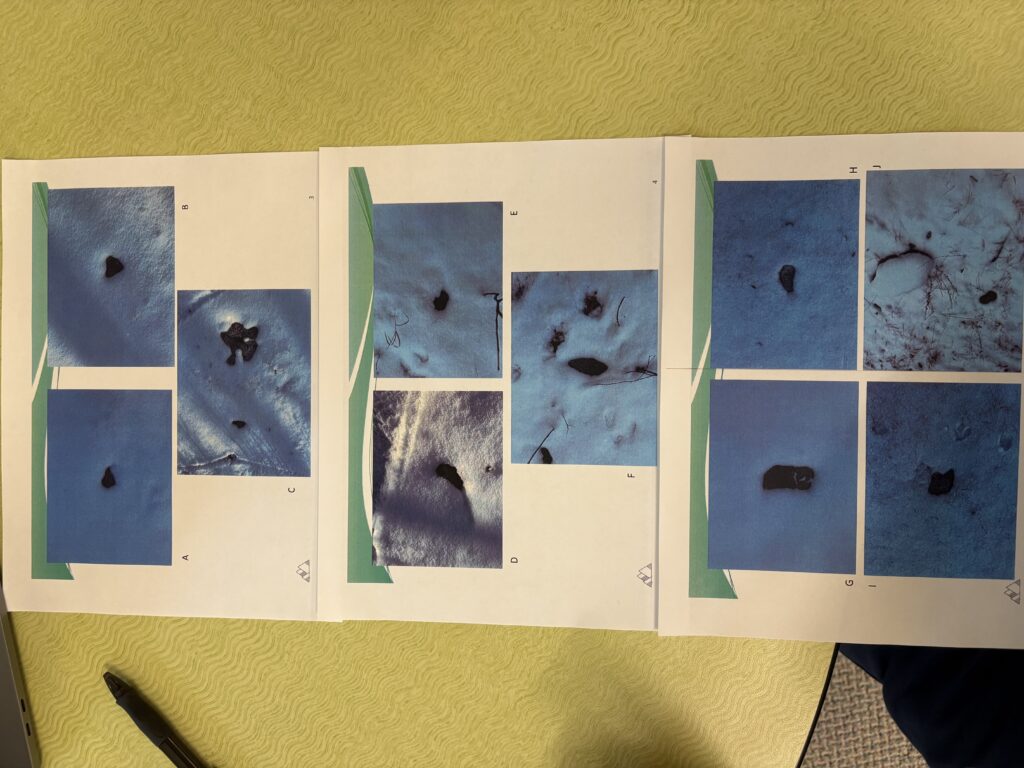
We were then tasked with coming up with ideas on how this happened. Here a couple predictions and observations from the class…
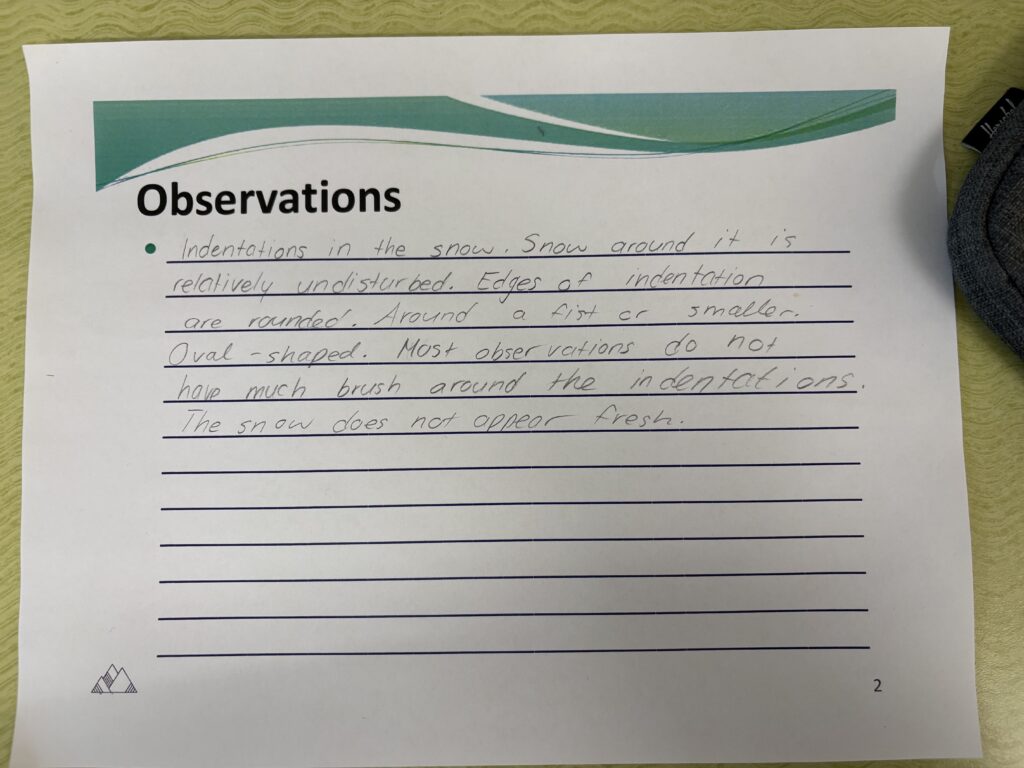
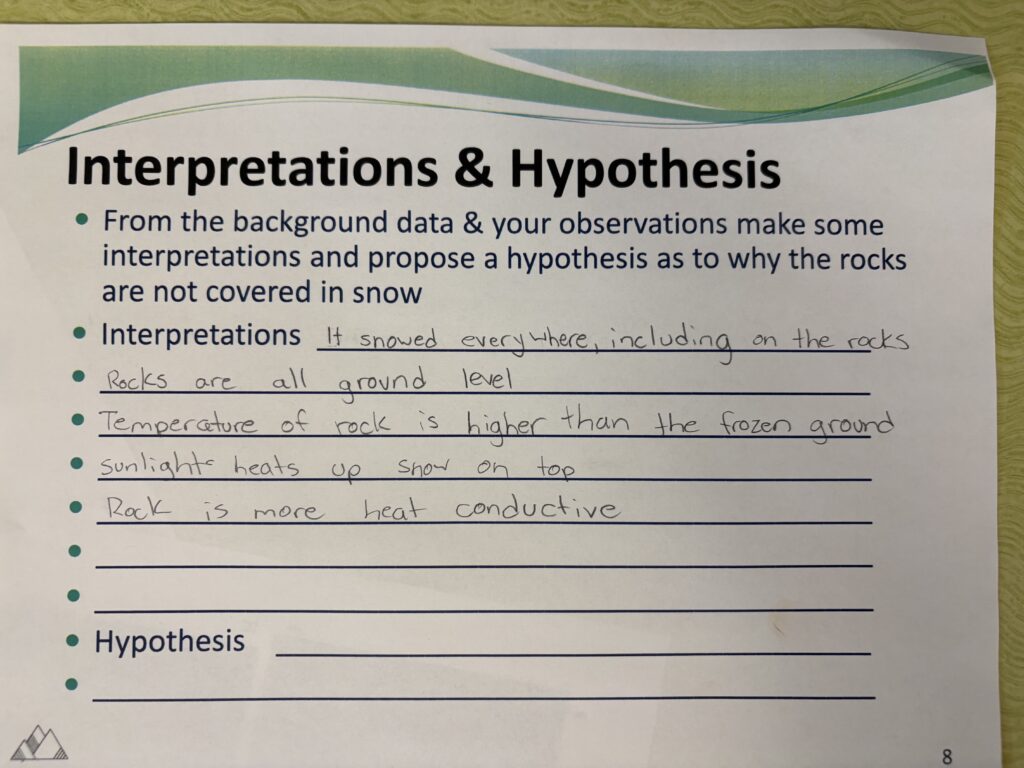
The other guesses not documented on paper: the rock’s composition being partly salt, and animals licking the rocks. We were then given the real answer: the rocks are slightly radioactive, and this reaction generated enough heat to melt the snow. No one in the class had considered radioactivity. Although our He continued his presentation, discussing how different civilizations over time have crafted myths to explain natural phenomena. (Zeus – god of lightning, for example)
Science and Misinformation
We went on to talk about today’s social atmosphere and how growing mistrust is weakening the connection between science and the public. The phrase “science says” has become common, with media often claiming “scientists report…” or “certain scientists disagree…”. Instead of taking these statements at face value, it’s worth first asking, “Which scientists?” After all, there are over a thousand distinct branches of science. This diversity underscores why publishing peer‑reviewed research is essential. It allows scientists to share their findings with fellow experts, sparking discussion and critical evaluation that ultimately benefits society. Equally important is ensuring that students learn to read and interpret scientific literature, so they can recognize credible evidence and think critically when catchy but misleading news starts circulating.
Reflection
This presentation really opened my eyes to the bigger problems hurting science today. That people reacting angrily to headlines without digging deeper, growing distrust in scientists, and students misreading cherry-picked data because they lack crucial information. It made me realize how crucial reading comprehension and media literacy is for students. Science needs citizens who not only think rationally about the world but to question the authenticity of their own knowledge. I hope to inform students to not always believe what they see/hear on the internet or media, but if they are interested in something, be curious. Take initiative of your own learning and help the world become a better place.